Winter weather in the Midwest introduces time-sensitive challenges to commercial construction. Snowstorms, frozen ground, and shorter daylight hours can impact projects without thorough, proactive planning. Expert commercial construction managers in the Midwest know how important it is to build with the seasons’ impacts in mind, especially during the colder months. Staying on track during a Midwest winter requires understanding how weather affects every part of a build, including materials, workforce, and site logistics, and having the strategic expertise to plan around it.
Freezing temperatures can delay some of the most essential construction work in the early phases, affecting the overall timeline. When the ground is frozen solid, site development slows down or pauses. Crews may need to wait to pour foundations or install underground utilities, such as water lines or electrical conduit, until temperatures warm, which can take weeks or even months.
Concrete, in particular, requires extra care in winter. Standard mixes are not designed for freezing conditions, so it’s vital to work with a partner who understands the needed materials for builds that begin in the fall. Boyd Jones often uses heated materials or additives to help it cure properly at temperatures below 40°F. If not protected from the cold, concrete can freeze before setting, leading to weak or uneven results.
Cold temperatures also pose safety risk to project teams working onsite. Prolonged exposure to cold can increase the risk of hypothermia and frostbite. This means shorter workdays, more frequent breaks, or time spent doing other tasks indoors. We regularly adjust schedules to ensure our crews stay safe and productive, and temporary heating solutions can help keep workers warm when temperatures drop.
Most construction schedules rely on consistent access to the site and nearby supply lines. But Midwest winters often cause unavoidable conditions.
These conditions require project teams to rearrange tasks or resequence crew schedules, which requires flexibility and quick decision-making.
To keep things moving, we remain flexible and adapt the project schedule based on the season. When we know we will be building during the winter months, we line up tasks that are better suited to cold weather.
With an adaptable approach, we identify strategic solutions to move forward wherever possible, while ensuring we deliver the safety and quality our partners expect.
For example, at Hillcrest Highlands, disciplined cold-weather concrete planning and tight coordination with precast and steel erectors allowed our team to maintain quality and schedule during a December hollow-core topping slab pour. Despite crucial scopes taking place during the winter, we delivered the project on schedule.
Starting a build in the heart of a Midwest winter carries clear risks. That is why strong preconstruction planning is key, especially in areas with harsh winters.
We are experts in preconstruction planning and project management. We address weather impacts as part of our comprehensive approach. Whether partnering with a client on a site development or navigating a complex addition, our forward-thinking approach helps anticipate weather-related delays before they occur.
We may also offer to self-perform construction scopes that benefit your project, helping you respond quickly to seasonal challenges across sectors, from education and community spaces to industrial and mission-critical facilities.
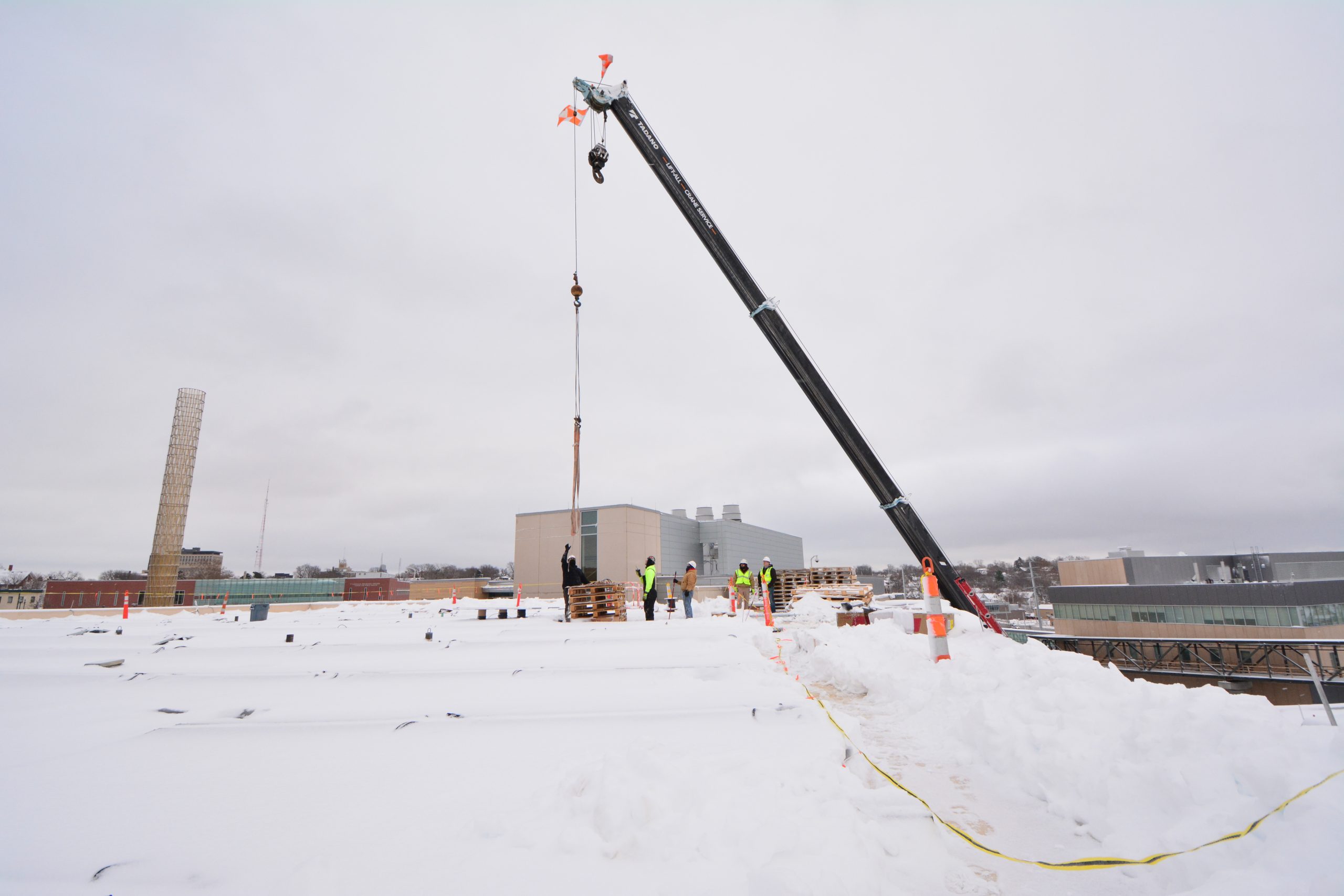
We use several methods to keep work progressing during the cold months. Temporary weather protection is one of the most important, ensuring the safety of your project and the people working hard to bring it to life.
Because we self-perform many core tasks, we can rearrange jobs quickly based on the season and weather. That kind of flexibility can be more challenging when all work is subcontracted.
Our winter strategy is thorough, always looking ahead with expert solutions. We double-check materials, shift schedules early when needed, and establishclear communication protocols to identify delays before they affect project timelines.
At the Pottawattamie County Public Health Building, pre-framing allowed us to avoid extensive temporary enclosures and quickly create a conditioned environment for concrete pours. This strategic decision reduced winter-related costs and kept the project on pace through the coldest months.
Every winter brings its own challenges, but that does not mean commercial work has to stop. With precise planning and a strategic approach, projects can keep moving forward, even in the snow and cold.
By accounting for weather in the schedule, strategically sequencing work, and prioritizing safety every day, we minimize risks and maintain progress. Winter conditions may require adjustments, but with the proper planning, projects continue moving forward with consistency, efficiency, and long-term goals intact.
We use heated mix, insulating blankets, or temporary enclosures to help concrete cure properly in freezing temperatures.
Yes, but with safety as our number one value, work may slow or pause until it is safe to ensure everyone’s well-being. We often switch to indoor tasks or reschedule based on forecasts, ensuring projects are still on track for timely completion.
Frequent temperature swings, snow, ice, and wind make it harder to predict conditions and keep consistent progress. This highlights the importance of working with a commercial construction partner that remains agile in the face of these challenges.
We shorten shifts, provide heated rest areas, use winter-appropriate safety gear, and adjust work based on daily temperatures.
When your project needs to keep moving through freezing temps and unpredictable storms, having a contractor that plans for Midwest weather makes all the difference. Headquartered in Omaha, Nebraska, Boyd Jones’ expertise extends across the Midwest and beyond, and we continually adjust our approach to other to keep work safe and on track year-round. See how we tackle every season with smart solutions and strategies for commercial construction services in the Midwest. Let’s connect to start building your story with confidence this winter.